
A research team at Memorial University hopes their new substance education materials will be in more classrooms this year
Noah Johnston
Kicker
Researchers working on the DECYDE project are hoping their strategies for substance education will soon be found in more schools in this province.
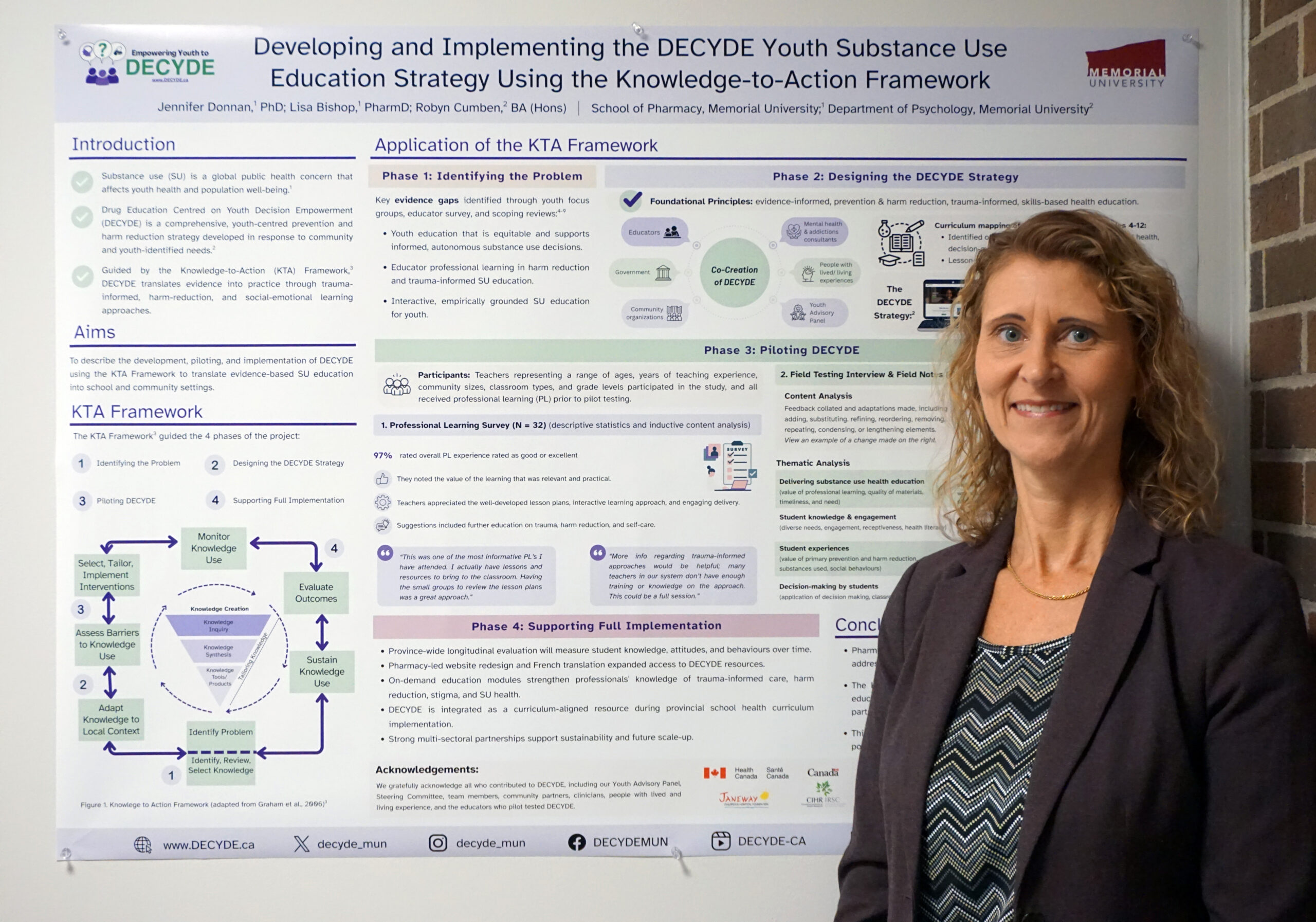
In 2021, two professors at Memorial University’s school of pharmacy were working on a policy evaluation about cannabis use after legalization. They were not surprised that the people they spoke with during their research had concerns about how legalization would affect young people. They were surprised to find those young people seemed to have very little knowledge about cannabis. That was the beginning of a research and development process that resulted in DECYDE.
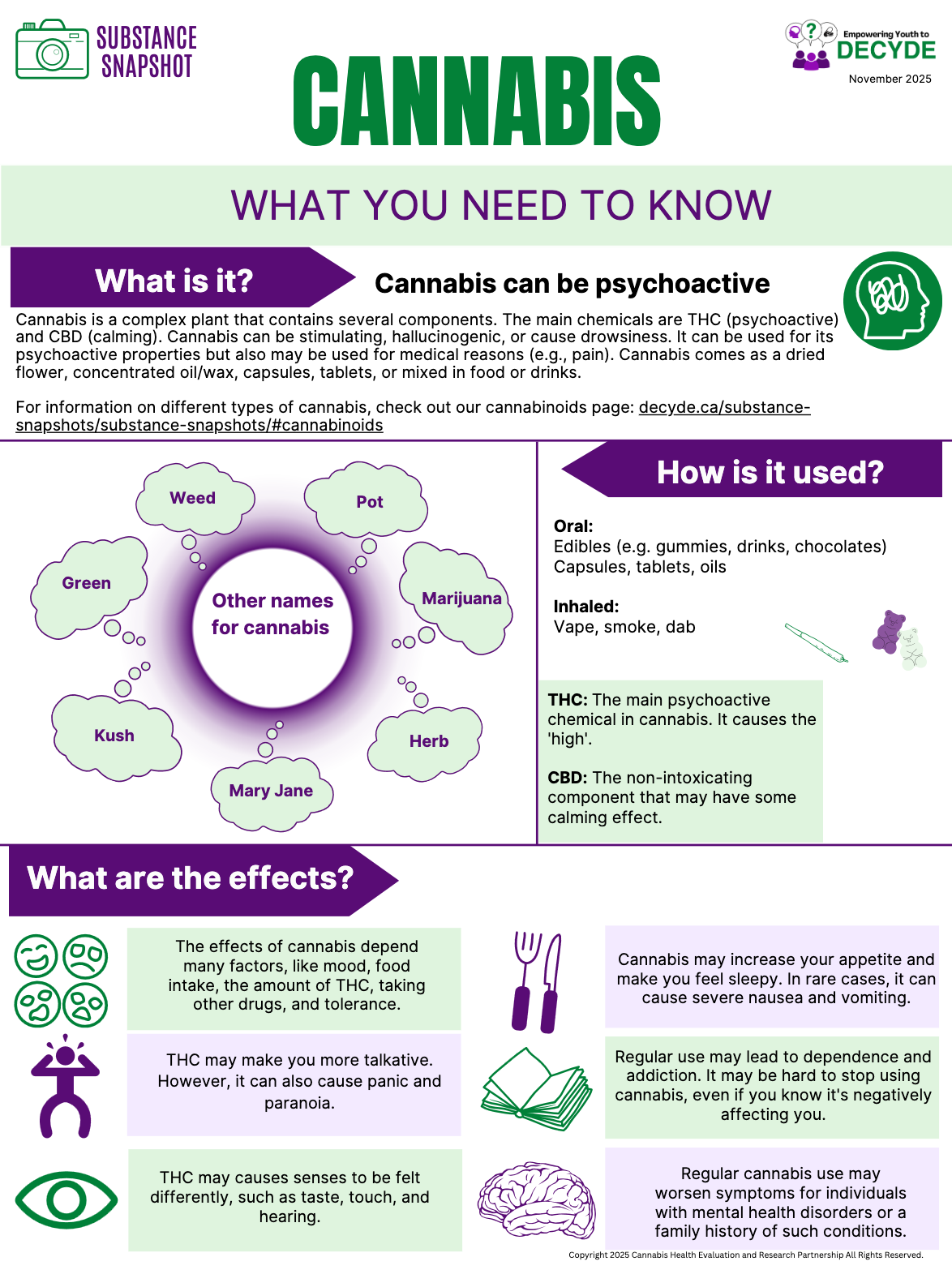
DECYDE stands for Drug Education Centred on Youth Decision Empowerment. It is a comprehensive substance use prevention and harm reduction strategy for youth created by a research team at Memorial University; it began with an attempt to fill that gap around cannabis.
Jennifer Donnan is one of the projects co-leads. She said that while working on issues surrounding cannabis education, it became clear the problem was broader than she had thought.
“Our intent at the beginning was to create a substance use education program specifically around cannabis to fill that gap in light of the new legalization,” Donnan said. “But the more we got into it and talked to different people in the community, more youth, it was just so obvious that substance use education was lacking all around.”
Donnan and her co-lead Lisa Bishop began working on materials they hoped could overhaul drug education on a national scale. Working on DECYDE, the two set out to correct what they saw as several flaws in drug education.
Existing programs, such as DARE — a program that sends police officers into schools to provide drug education — used abstinence-based messaging. Researchers worried that painting substance users as universally bad could damage kids’ perceptions of themselves, or their family and friends who may have used substances. This became even more complicated in the wake of cannabis legalization.
Generally, programs available in schools were also inconsistent. Some schools would offer external programs like DARE and some would not. Those that did would often limit them to a specific grade level. Access to drug education could be heavily impacted by the effect of geography on program availability.
To solve the issue of access, Donnan and Bishop created DECYDE as a set of educational materials and lesson plans that could be administered in classrooms by teachers. That means the material can be available anywhere, and the information is coming from someone students know they can trust.
Donnan says existing abstinence-based models might work for younger children initially, but behavioural changes in their teen years challenged that approach. It was important to her that DECYDE took an empathetic approach to drug education.
“Our first goal is always to prevent,” Donnan said. “But acknowledging that youth developmentally are curious and they have high risk-taking potential, that some of them are going to engage in substances and they need to be prepared to make safe and informed choices.”
Bishop says meeting the changing needs of kids as they grow was very important, so DECYDE provides educational materials for grades 4 to 12.
“It’s all very much scenario based. And that way, as they get to junior high and high school, we build on that,” said Bishop. “We bring in more realistic decision-making situations where you’re faced with things that you have to navigate.”
Megan Heath was a teacher who helped prepare the materials for classroom use. She said it’s about time to update drug education.
“When I was teaching full-time, I would have to create a lot of my own health curriculum, just because it was very, very dated, with curriculum guides from the ’90s,” Heath said. “I think that this was just a really modernized way to look at substance use and health literacy.”
The response from teachers, Bishop said, has been near-universal acclaim. Feedback from teachers who piloted the project during its development was integrated into the final release.
That final release is now in schools. Bishop says the grade 7 to 9 portion of DECYDE is now listed as a recommended resource in the province’s health curriculum. She hopes school districts will choose to adopt DECYDE for other grades soon.
“We do want youth to be informed, to make good decisions, to be safer, and to save lives,” Bishop said. “So that’s our ultimate goal.”


Be the first to comment