
Without the correct paperwork, selling your favorite treats can cause legal issues.
Aurora Hickey
Kicker
Christmas is just around the corner, and with it comes craft fairs, markets and of course holiday treats.
This time of year is often associated with things like cookies, cakes and breads, but selling food comes with risk.
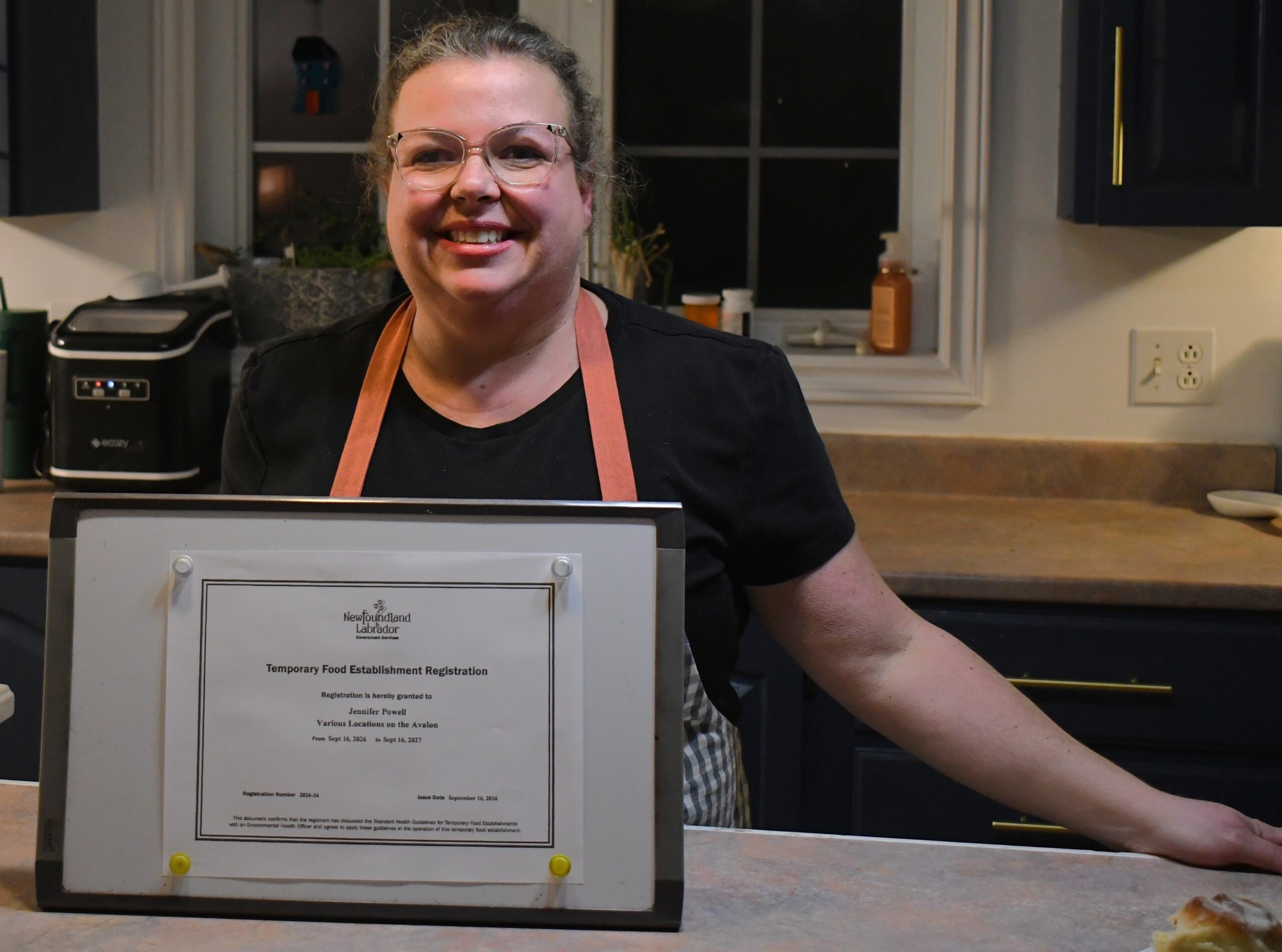
Jennifer Moran-Powell runs an at home bakery and is preparing for a busy holiday season.
For Powell, there is an extra step in selling her product. She makes sure she is legally allowed.
“There are regulations put in place that protect me and my customers,” said Powell. “I’m a rule follower, that is very important to me.”
Powell has an important document that allows her to legally run her business: a food license issued by the provincial government of Newfoundland and Labrador.
Powell says not having a food license would put her and her business at great risk. It is a simple step that is often overlooked.
“I put my name forward for a community farmers market and the organizer told me about food licenses and that I needed one to participate,” said Powell.
When the government issues this document to a person it then allows that person to legally sell food products to members of the public.
According to the government of Newfoundland and Labrador website “preparing food at home for the public requires a clear understanding of food hygiene standards, sanitation, construction of premises and equipment usage.”
Having a license not only protects the seller, but also the customers and venues food may be sold at.
Gord Delaney is the owner and operator of Milestone Promotions.
Delaney says vendors without a food license is an issue.
“It’s a problem because if they avoid getting a food license, it makes me question their legitimacy and health and safety regulations,” said Delaney. “It should be as equally concerning to them as it is to me to make sure they have one.”
Delaney makes it a requirement that all vendors at his shows are licensed.
“Food licenses are important because health and safety is everyone’s concern,” said Delaney. “Service NL communicates to the vendor what needs to happen, the vendor then gives me their licenses so I can then show service NL that all my vendors are licensed.”
Delaney says Service NL sometimes shows up unexpectedly at his shows to check with vendors. If a vendor didn’t have a license, they could be shut down that day.
Tina Newhook is the director of communications with government services.
Newhook provided Kicker News with an emailed statement.
The statement reads that “whether someone operates a permanent food business or a temporary operation, such as vendors at fairs or markets, it is important they understand and meet the requirements that apply to their operation.’’
While a food license is free, the consequences for being caught without one are far from simple.
According to the provincial law, a vendor who doesn’t follow regulations could lose their license and face prosecution. If convicted they could face a fine or other penalties.
As intimidating as it may sound, obtaining a license is simple.
“It was very easy,” said Powell. “I went online and applied through the link.”
326 licenses have been issued between April 1, 2025 and March 31, 2026.
The number of vendors that were shut down in the last year was not recorded.
Anyone can apply through Food Establishment Licence – Government Services



Be the first to comment