
In March, gasoline prices in Newfoundland and Labrador have fluctuated sharply, raising concerns about the cost of living in the province.
Nicholas Hayley
Kicker
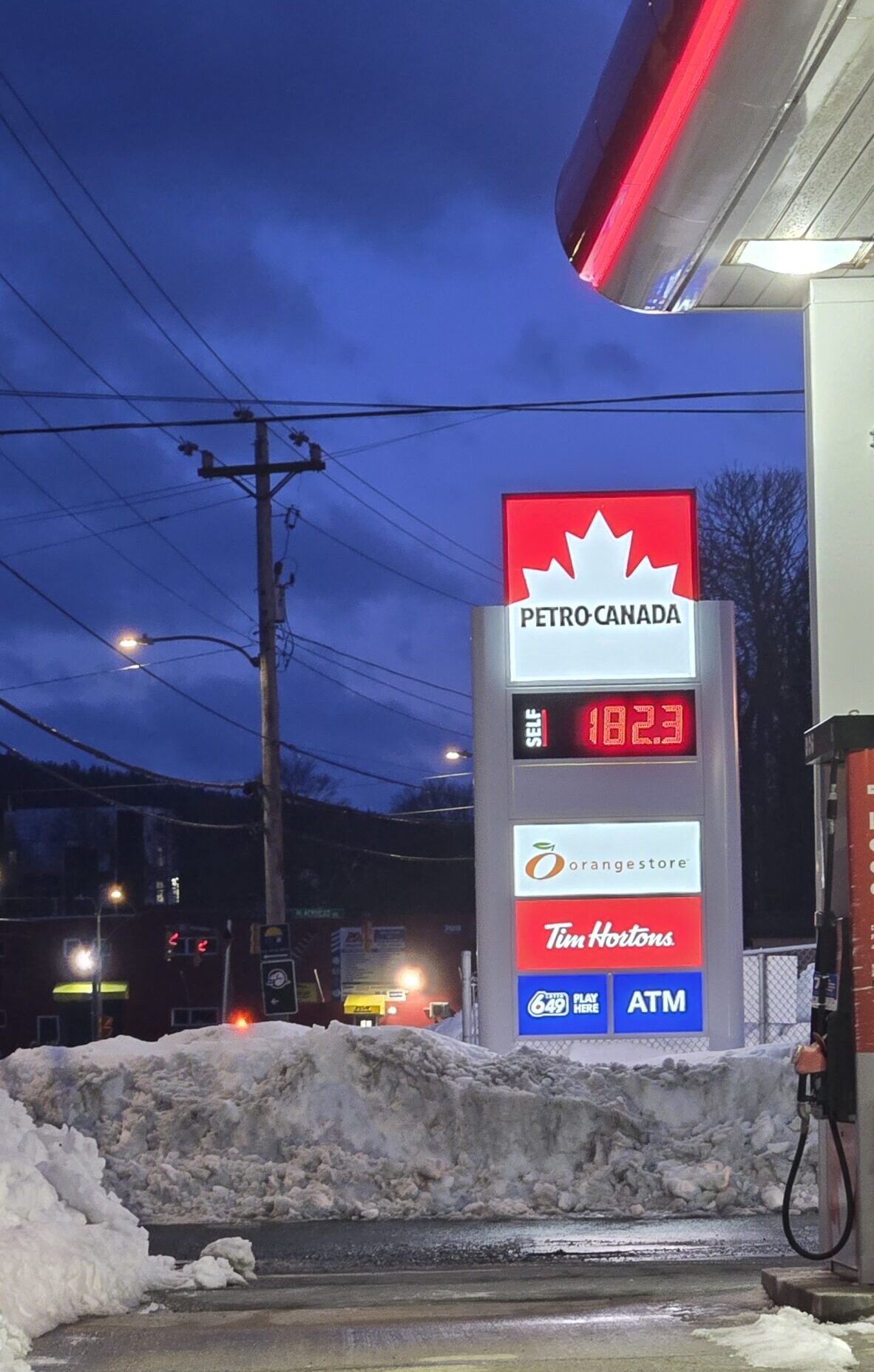
Gas prices continue to fluctuate across Newfoundland & Labrador, with recent trends displaying more increases than decreases.
The Public Utilities Board lowered prices by 10 cents per litre on Wednesday immediately after a rise of 7.9 cents per litre on Tuesday.
The United States and Israel’s invasion of Iran has created instability in the prices of oil, gas and other fuels throughout the month of March.
While gasoline and diesel prices have been affected, furnace fuels have fluctuated as well, which presents a challenge for Newfoundland and Labrador homeowners as cold, snowy weather continues to persist into early spring.
Wednesday’s decrease in fuel pricing may provide only temporary relief before prices surge again, as the conflict in the Middle East rages and the prices of international crude oil continue to be affected. The extraordinary adjustment was made as the Public Utilities Board determined that the price set on Tuesday was well above the acceptable market standard.
Premier Tony Wakeham promised earlier this month he would make the province’s gas tax reduction plan permanent legislation ahead of its intended expiry date of April 1.
If passed, this legislation would hypothetically see Newfoundland and Labrador’s fuel prices become some of the lowest in Canada, despite recent increases.
Phillip Downey, one of the administrators of the NL Fuel Price Stand group on Facebook, suggests lowering taxes might not offer a complete solution. He says that as the government decreases taxes, it incentivizes manufacturers to increase prices to maximize returns, meaning that the price of fuel would not drastically decrease for the average consumer.
“You were paying it yesterday, so you can pay it again tomorrow,” he said.
The Public Utilities Board is responsible for setting gas prices in Newfoundland and Labrador. The base price is influenced by market conditions, then adjusted to account for other factors such as excise taxes and transportation costs. Downey says transportation costs are among Newfoundland’s most challenging obstacles to overcome.
“We need to be on par with Alberta, because they refine their own products interprovince, they transport their own products interprovince, while we are so far off the beaten path”, he said.
As Newfoundland is an island with no physical routes to and from the mainland, it relies solely on air and marine transport, driving up transportation costs, which are then factored into the overall consumer price of the product.
The Public Utilities Board is unique to Newfoundland and Labrador in that it sets a regular standard price for oil and gas across the entire province based on market conditions and other external factors, while other provinces lacking an equivalent can experience intense competition as prices fluctuate more frequently.
Despite its authority to set prices, the Public Utilities Board has not been able to achieve the level of economic stability that many Newfoundlanders and Labradorians long for.
Terry O’Neill, the founder of the NL Fuel Price Stand group and a former manager at Nalcor, is shocked that a solution has yet to be found.
“We meet a lot of challenges, so to go this long and not be able to provide a solution that brings stability into the oil and gas sector is kind of mind boggling,” O’Neill said.
The Public Utilities Board’s next adjustment is scheduled for Thursday, March 27.



Be the first to comment