
People in Newfoundland and Labrador are using generative AI as a new dangerous form of cyberbullying, specifically targeting minors.
Ellen M. Rogers
Kicker

In Newfoundland, a new wave of cyberbullying is no longer a distant threat. Cyberbullying has evolved with the emergence of AI-generated content, which often comes with limited restrictions.
Since generative AI programs became widely available in 2022, they have posed new risks to safety for teens and children, especially when manipulated by individuals with malicious intent.
Cyberbullying in our province was once limited to hateful messages, rumours and threats. In recent years, however, it has escalated: Private images are now sometimes shared without consent, often through apps such asSnapchat, an app many mistakenly believe instantly erases photos.
Creating or sharing such images of minors is illegal. That’s why the Newfoundland and Labrador English School District acts to warn students early, hoping to prevent these incidents before they happen.
With the rise of generative AI, this form of cyberbullying has entered a disturbing new phase. AI tools can now be used to take innocent photos or videos of minors and alter them to create fake, explicit images, often without the victim’s knowledge or consent.
RNC media relations officer Const. Stephanie Myers confirmed an increase in AI-generated content used in this context and said that it is “happening in Newfoundland,” particularly among young people. To protect minors’ identities, she could not disclose specific cases.
She emphasized that, regardless of whether these images are “real,” producing or distributing them is still a crime.
“. . . (S)haring and forwarding these images, even if you didn’t create them, is also a crime,” Myers said.
Myers recommends that minors set their social media accounts to private and accept follow requests only from people they know to protect themselves from exploitation.
Jonathan Anderson, an associate professor at Memorial University who researches computer security, explains that while it’s impossible to fully protect minors from AI-driven cyberbullying, there are effective ways to reduce the risks.
One safeguarding method he mentioned is a tool called Nightshade. He explained that when applied to a photo, Nightshade scrambles the image’s data, making it difficult for AI programs to manipulate or generate fake versions. In this way, Nightshade acts as a digital shield, helping prevent the creation of harmful or unauthorized content from protected images.
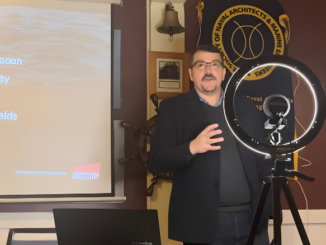
Fortunately, Myers also confirmed that, given this new face of cyberbullying, the officer who runs the child exploitation unit has now started giving presentations at junior high and high schools to inform youth of online safety practices and how they can manage their online profiles responsibly.
Be the first to comment